Introduction
Have you been catching colds more often lately? Or maybe a small cut on your hand is taking way longer to heal than it should. Even food might taste a little different than before. These small changes are easy to ignore, but they can be some of the first Zinc Deficiency Symptoms that your body is low on zinc.
Zinc is a mineral your body needs in small amounts, but it does a big job. It helps your immune system fight off germs, helps wounds heal, and even helps you taste and smell things properly. Your body cannot make zinc on its own, so you need to get it from food every day.
Low zinc levels are more common than most people think. It can happen to anyone, but it’s more common in vegetarians, older adults, pregnant women, and people with stomach or gut problems. Because the symptoms can look like other issues (like low iron or low vitamin C), many people don’t realize zinc is the real problem. If you keep catching colds or your cuts heal slowly, it may help to also read our guide on Signs of Weak Immunity, since more than one nutrient can affect how well your body fights off illness.
In this guide, you’ll learn the 10 main warning signs of low zinc, what causes it, who is most at risk, and easy ways to fix it through food.
What Is Zinc?
Zinc is called a “trace mineral” because your body only needs a tiny amount of it. But even though the amount is small, it plays a big role in keeping you healthy.
Think of it this way: Zinc works like a behind-the-scenes helper. It’s not doing one big job — it’s quietly supporting hundreds of small jobs in your body every day, like healing your skin and keeping your immune system alert.
Why Zinc Is Important
According to the National Institutes of Health (NIH), zinc helps your immune system work properly, helps wounds heal, and supports normal growth in children, teens, and pregnant women.
Zinc also helps you taste and smell food properly. That’s one reason doctors often mention a change in taste or smell as an early warning sign. Without enough zinc, your body slowly becomes less able to repair itself and fight off common infections.
What Causes Low Zinc Levels?
Low zinc usually happens slowly, over time, because of one or more of these reasons:
Not Eating Enough Zinc-Rich Food
If your diet doesn’t include much meat, seafood, or dairy, you may not be getting enough zinc, since these foods are some of the best natural sources.
Poor Absorption
Sometimes your body has trouble absorbing zinc properly, even if you’re eating enough. This can happen with health issues like:
- Crohn’s disease
- Celiac disease
- Long-term diarrhea
- Past stomach surgery
A healthy gut plays a big part in how well your body absorbs zinc and other nutrients. Our article on How to Improve Gut Health Naturally shares simple habits that can help your digestion work better.
Eating Mostly Plant-Based Meals
Whole grains and beans contain a compound called phytate, which can make it harder for your body to absorb zinc. This doesn’t mean you should stop eating these foods — just try to balance them with other zinc sources.
Life Stages That Need More Zinc
Some times in life naturally need more zinc, such as:
- Pregnancy
- Breastfeeding
- Growing up as a child
- The teenage years
Alcohol Use or Long-Term Illness
Drinking alcohol regularly, or having a long-term illness like kidney disease, can lower your zinc levels over time.
Who Is Most at Risk?
- Vegetarians and vegans
- Pregnant and breastfeeding women
- Older adults
- People with stomach or gut problems
- People who drink alcohol regularly
- People recovering from surgery or serious illness
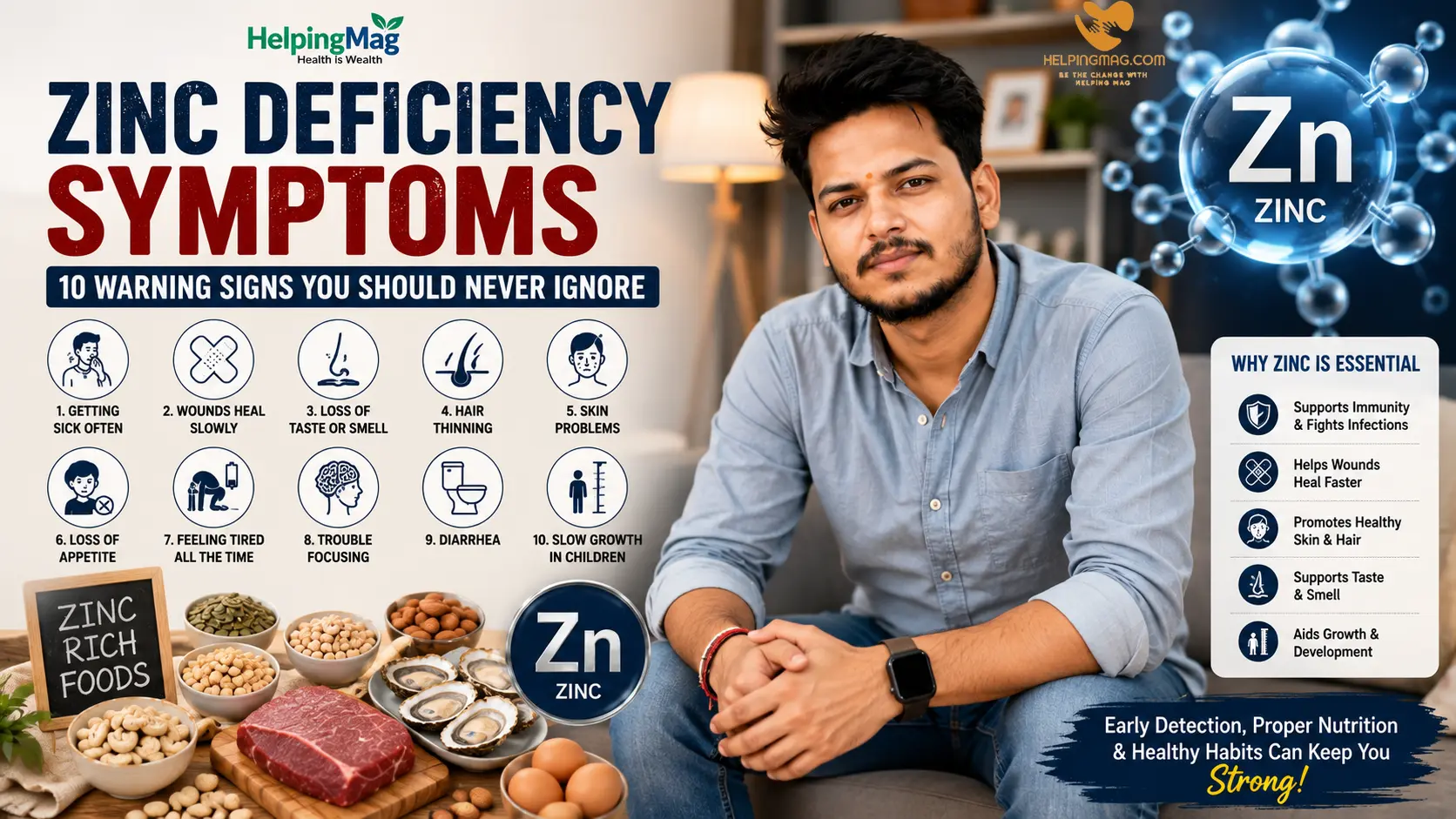
10 Warning Signs of Low Zinc
1. Getting Sick Often
Zinc helps your immune cells do their job. When zinc is low, your body may struggle to fight off colds and infections as easily. Vitamin C works in a similar way, so low levels of both can make things worse — you can read more in our guide on Vitamin C Deficiency Symptoms.
2. Wounds Heal Slowly
Zinc helps repair skin. If small cuts or scrapes are taking longer than usual to heal, low zinc could be a reason.
3. Losing Your Sense of Taste or Smell
This is one of the clearest signs of low zinc. Food may start to taste bland or “off,” even if it’s cooked the same way as always.
4. Hair Thinning
Zinc helps your hair grow properly. If zinc stays low for a long time, some people notice more hair falling out than usual. But hair loss can have many causes, so it’s best to check with a doctor instead of guessing.
5. Skin Problems
Because zinc helps repair skin, low levels can sometimes lead to dry skin, rashes, or breakouts that look like acne.
6. Losing Your Appetite
Some people notice they feel less hungry than usual, which can also be connected to changes in taste.
7. Feeling Tired All the Time
Low zinc can leave you feeling worn out with little energy, similar to what happens with other nutrient gaps like the ones we cover in Magnesium Deficiency Symptoms.
8. Trouble Focusing
Since zinc supports brain function, some people feel foggy or find it hard to concentrate when their levels are low.
9. Diarrhea
Zinc helps keep your gut lining healthy. Ongoing diarrhea can both cause low zinc and be a result of it, so it’s worth mentioning to your doctor.
10. Slow Growth in Children
In kids and teens, low zinc over a long period can slow down normal growth, which is why getting enough zinc is especially important during these years.
Zinc and Your Immune System
Zinc helps your body build and use immune cells — the ones that find and fight off germs. When zinc runs low, this process slows down. That’s why some people with low zinc notice that colds seem to stick around longer or come back more often.
This doesn’t mean every cold means low zinc — getting sick sometimes is completely normal. But if you keep getting sick more than usual, especially along with other signs on this list, it’s worth talking to a doctor.
Zinc and Your Skin, Hair, and Wound Healing
Your skin is always repairing and renewing itself, and zinc plays a big role in that process. That’s actually why zinc creams are often used for minor cuts and skin injuries.
The same repair process also affects your hair. So if zinc stays low for too long, some people notice more shedding than normal. Before assuming it’s only zinc, it’s smart to also check other causes, like thyroid issues or low iron, which we explain in our Iron Deficiency Symptoms guide.
Best Foods High in Zinc
The easiest way to keep your zinc levels healthy is by eating a mix of different foods.
Animal-Based Foods (easier for your body to absorb):
- Oysters (one of the richest sources)
- Beef and lamb
- Chicken and turkey
- Eggs
- Milk, cheese, and yogurt
Plant-Based Foods:
- Chickpeas and lentils
- Pumpkin seeds and cashews
- Whole grains like oats and quinoa
- Zinc-fortified cereals
- Tofu
If you eat mostly plant-based meals, you may need a little more zinc than average, since it’s absorbed less easily from plant foods.
What Helps or Hurts Zinc Absorption
Things that can help:
- Eating zinc-rich foods along with some protein
- Soaking beans and grains before cooking
- Spreading zinc-rich foods across different meals instead of one big meal
Things that can reduce absorption:
- Eating very high-fiber meals at the same time as zinc-rich foods
- Taking too much calcium at the same time
- Drinking alcohol regularly
You don’t need to avoid these foods completely — just be mindful of timing and balance.
Should You Take Zinc Supplements?
Most people can get enough zinc just from food. Supplements are usually only needed if a doctor confirms you have a deficiency, or if you have a health condition that affects absorption, like during pregnancy.
Taking too much zinc can actually cause problems, like nausea or trouble absorbing copper. So it’s best to talk to a doctor before starting supplements, ideally after a simple blood test. If you already take a daily multivitamin, our guide on Best Time to Take Multivitamins explains how timing can affect how well your body absorbs nutrients.
Simple Daily Routine for Healthy Zinc Levels
Morning: Eat eggs, fortified cereal, or a small handful of pumpkin seeds with breakfast.
Afternoon: Add a source of protein, like chicken, beans, or tofu, to your lunch along with some vegetables.
Evening: Choose lean meat, seafood, or a bean dish for dinner, and try to avoid heavily processed convenience foods.
Before Bed: Try to get 7–9 hours of good sleep, since rest also helps your immune system stay strong.
Simple Prevention Tips
- Eat a mix of both animal and plant-based zinc sources
- Add some protein when eating plant-based meals
- Limit alcohol
- Avoid extreme or overly restrictive diets
- Get regular health checkups, especially if you’re at higher risk
- Treat gut or stomach issues early, since they can quietly lower your zinc over time
When to See a Doctor
Talk to a doctor if you notice:
- Getting sick often or for longer than usual
- Cuts or wounds that heal very slowly
- A change in how food tastes or smells
- Ongoing hair thinning
- Constant tiredness along with other signs on this list
- Any symptom that doesn’t improve after changing your diet
A doctor can run a simple blood test to check your zinc levels and rule out other possible causes before suggesting treatment.
Frequently Asked Questions
What is the first sign of zinc deficiency?
A change in taste or smell, along with slow-healing cuts, are often the earliest signs people notice.
Can low zinc cause hair loss?
Yes, if zinc stays low for a long time it may lead to hair thinning. But hair loss has many possible causes, so it’s best to check with a doctor.
What foods have the most zinc?
oysters, red meat, chicken, pumpkin seeds, chickpeas, and fortified cereals are some of the best sources.
Can vegetarians get enough zinc without meat?
Yes. Eating a mix of beans, seeds, whole grains, and fortified foods, along with some protein, can help you get enough zinc.
Is it safe to take zinc supplements without a test?
It’s best to check with a doctor first, since taking too much zinc can cause side effects like nausea or low copper levels.
Conclusion
Your body only needs a small amount of zinc, but it plays a big part in keeping your immune system strong, healing wounds, and supporting your skin and hair. Since your body can’t store much zinc, eating zinc-rich foods regularly is the best way to avoid running low.
Noticing the early signs — like getting sick often or losing your sense of taste — can help you fix the problem before it gets worse. For most people, eating a variety of foods is enough to stay healthy. But if your symptoms don’t improve, it’s always a good idea to talk to a doctor.