Introduction
Vitamin B12 is one of the most important nutrients for maintaining energy, brain functions, nerve health and production of red blood cells. Although it is very important, many people around the world may not consume enough vitamin B12 in their diet or may not absorb it correctly. This guide will discuss the most common vitamin B12 deficiency symptoms, causes, treatment and prevention.
Vitamin B12 deficiency can be a slow process and may not be apparent in the early stages. Tingling, weakness, brain fog and fatigue are symptoms that many people overlook, thinking they are a result of stress, aging or poor sleep.
Vitamin B12 deficiency, without treatment, may progress to significant neurological, psychiatric and life-altering conditions.
What Is Vitamin B12?
Vitamin B12, also known as cobalamin, is a water-soluble vitamin that plays several crucial roles in the body.
It helps:
- Make red blood cells
- Maintain healthy nerves
- Support brain function
- Assist DNA production
- Use food to make energy
Vitamin B12 is not as commonly found in plants as other vitamins, but it is mostly found in animal products.
Why Vitamin B12 Is Important
The National Institutes of Health (NIH) say that vitamin B12 plays a crucial role in the production of red blood cells, neurological function and DNA synthesis. Fatigue, weakness, nerve issues and more health complications may result from a deficiency.
Low levels of vitamin B12 can lead to:
- Fatigue
- Weakness
- Cognitive problems
- Mood changes
- Neurological symptoms
Individuals who have been suffering from Vitamin D Deficiency Symptoms in Men may suffer from increased fatigue and low energy level due to vitamin B12 Deficiency as well.
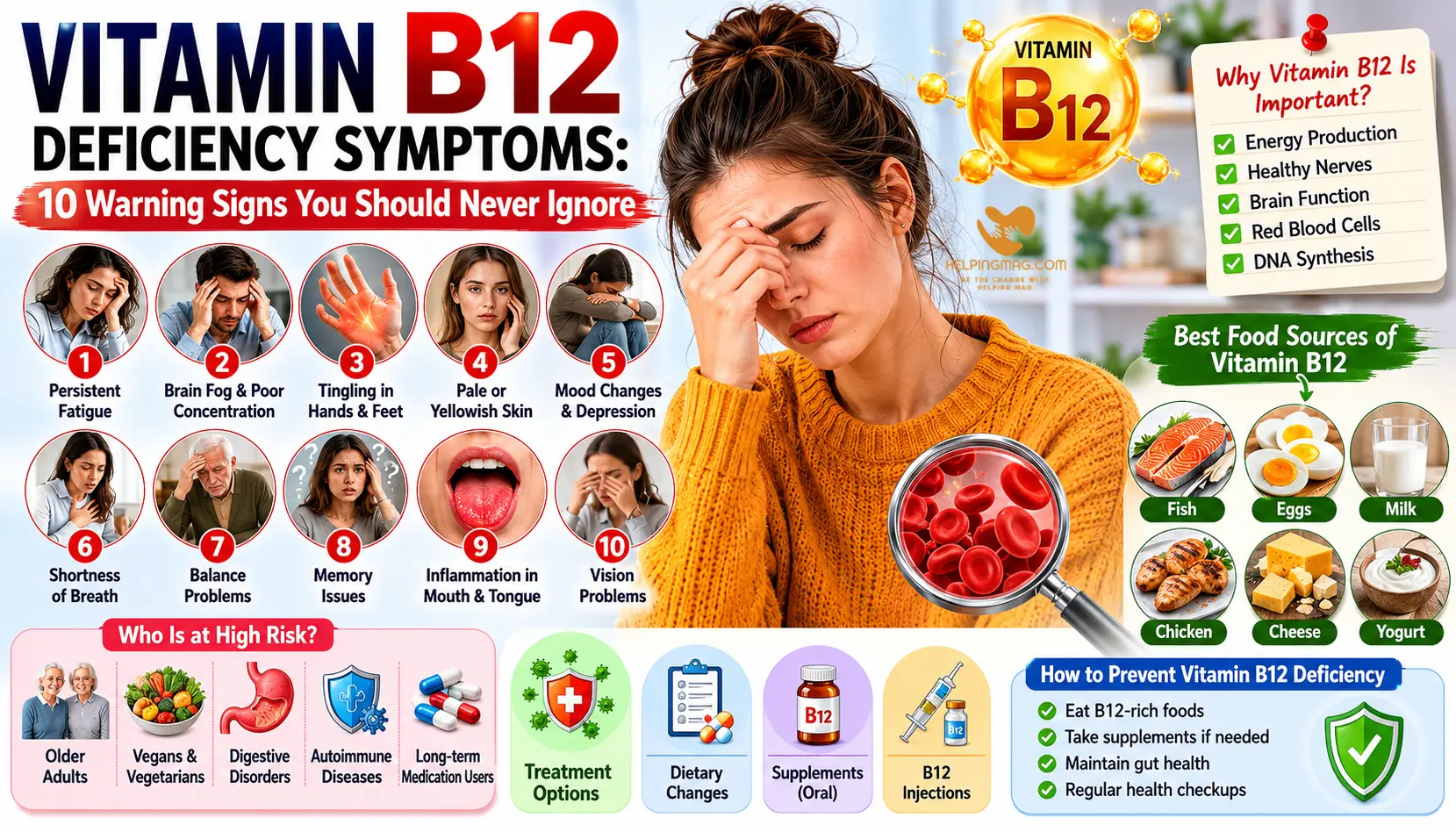
10 Common Vitamin B12 Deficiency Symptoms
1. Persistent Fatigue and Weakness
Constant fatigue is considered to be one of the earliest symptoms of vitamin B12 deficiency.
Inadequate B12 levels make it difficult to efficiently produce healthy red blood cells and therefore less oxygen is delivered throughout the body.
Common symptoms include:
- Low energy
- Excessive fatigue after a good night’s rest
- Reduced physical performance
2. Brain Fog and Poor Concentration
Vitamin B12 is important for the brain.
Low levels may result in:
- Difficulty concentrating
- Mental confusion
- Reduced focus
- Slower thinking
This sensation is often referred to as “brain fog”.
3. Tingling in Hands and Feet
Vitamin B12 plays a role in maintaining healthy nerves.
Deficiency can lead to damage to the coverings of the nerves resulting in:
- Tingling sensations
- Numbness
- Pins and needles feeling
Relying on this symptom should be avoided at all costs.
4. Pale or Yellowish Skin
Pale skin color may be due to decreased red blood cell production.
If the amount of yellowing is high, the leaves will be slightly yellow.
5. Mood Changes and Depression
Some studies indicate that vitamin B12 can affect the way a person feels.
Low levels have been associated with:
- Depression
- Irritability
- Anxiety
- Emotional instability
People experiencing chronic stress can also find helpful hints in the Stress Management Tips.
6. Shortness of Breath
Some people with a B12 deficiency may have reduced oxygen transport and therefore, will have:
- Breathlessness
- Increased heart rate
- Reduced exercise tolerance
7. Balance Problems
Damage to the nerves may occur after long periods of deficiency and cause imbalance and loss of coordination.
This is especially true of older people.
8. Memory Issues
Vitamin B12 is important for the brain.
Low levels can lead to:
- Forgetfulness
- Memory problems
- Learning problems with new information
9. Inflammation in the mouth and the tongue
Swollen, red, painful tongue can be a sign of a B12 deficiency.
Others experience the following:
- Mouth ulcers
- Burning sensations
- Problems with eating spicy foods
10. Vision Problems
In rare cases, deficiency-related nerve damage may affect vision.
Symptoms may include:
- Blurred vision
- Visual disturbances
Prompt medical attention is important if vision changes occur.
Causes of Vitamin B12 Deficiency
There are a number of reasons why vitamin B12 levels can be low.
Poor Dietary Intake
Individuals on a restricted diet that includes either highly vegan or vegetarian diets might not get sufficient amounts of B12 in their diet.
Digestive Disorders
Some digestive disorders can disrupt the absorption process.
Examples include:
- Crohn’s disease
- Celiac disease
- Gastritis
How to Improve Gut health naturally strategies can help with the absorption of nutrients.
Aging
Vitamin B12 absorption is less efficient as people get older because their stomachs make less acid.
Certain Medications
Long-term use of certain drugs can affect the absorption of vitamin B12.
Who is at the highest risk?
Higher-risk groups include:
- Older adults
- Vegans
- Vegetarians
- Patients who suffer from digestive diseases
- Individuals with autoimmune diseases
- Long-term medication users
Regular health checkups can help identify deficiencies early.
Best Food Sources of Vitamin B12
Natural sources include:
- Fish
- Salmon
- Tuna
- Eggs
- Milk
- Cheese
- Yogurt
- Chicken
Vitamin B12 can also be provided by fortified cereals.
Vitamin B12 and Immunity
Vitamin B12 is important for immune health.
Low levels may impact:
- Energy production
- The activity of a White Blood Cell
- Overall wellness
Additionally, those who are ill often may present Signs of Weak Immunity, further highlighting the importance of proper nutrition.
Treatment Options
Treatment varies from moderately to severely deficient.
Options may include:
Dietary Changes
Eating more foods high in vitamin B12.
Oral Supplements
Vitamin B12 is a supplement that many people can benefit from.
Knowing the best time to take multivitamins can enhance the ability to use nutrients.
Vitamin B12 Injections
In severe cases, injections may be needed, as prescribed by a doctor.
How to Prevent Vitamin B12 Deficiency
Prevention strategies include:
- Consuming vitamin B12 foods
- Monitoring nutrient levels
- Addressing digestive issues
- Taking supplements as needed
- Regular medical checkups
Prevention is easier than cure.
Daily habits that help keep vitamin levels healthy
Morning
- Have a protein-rich breakfast
- Stay hydrated
- Get sunlight exposure
Afternoon
- Include nutrient-dense foods
- Try to avoid too many processed items
Evening
- Eat balanced meals
- Maintain healthy digestion
Frequent practices contribute to the wellness process.
When to See a Doctor
Consult a doctor if you have any of the following symptoms:
- Persistent fatigue
- Numbness or tingling
- Memory problems
- Balance issues
- Ongoing weakness
Vitamin B12 deficiency is often detected by a simple blood test.
Frequently Asked Questions
What is the time period required for correcting the B12 deficiency?
Within weeks of treatment many people notice improvement and weeks of months may pass before people are cured.
Vitamin B12 deficiency can lead to anxiety?
Some people may experience mood shifts and anxiety due to low levels of vitamin B12.
Are vitamin B12 deficiencies common?
Yes. It is especially prevalent in older individuals and those who suffer from digestive problems.
Is there a way to prevent vitamin B12 deficiency?
In many cases, yes. Proper diet and supplementation can help maintain healthy levels.
Conclusion
Vitamin B12 plays a key role in the production of energy, maintaining a healthy nervous system, proper brain function, and overall well-being. Unfortunately, deficiency can be slow to develop and not show signs until symptoms are more advanced.
Some of the initial signs and symptoms of a B12 deficiency are fatigue, brain fog, tingling in the arms and legs, and mood changes. These can all be prevented if the problem of B12 deficiency is recognized early.
To ensure optimal vitamin B12 levels and overall health, it is important to have a balanced diet, take supplements if needed, and consult with a healthcare provider when needed.