Introduction
Stress has made the new reality of our lives. Emotional and mental strains can be caused by work pressure, financial problems, relationship problems, health concerns, and social expectancy. Development of practical stress management tips can be used to boost mental clarity, emotional balance and wellbeing.
Stress is good in small doses. It can enhance your concentration, or help you feel more alert, and respond faster to challenging circumstances. Nevertheless, stress, when chronic, may have a detrimental influence on physical and mental health.
The effects of long-term stress can be:
- Anxiety
- Depression
- Sleep problems
- Digestive issues
- High blood pressure
- Weak immunity
- Fatigue
The individuals who experience frequent fatigue, low frequency of illnesses, and/or poor concentration, are already exhibiting the possibility of having signs of weak immunity, which can be aggravated by chronic stress.
This is a guide on science based measures that can be used to deal with stress without any artificiality and live a healthier life.
The effects of stress on the body
Stress provokes the fight or flight reaction of the body.
The hormones are released in the body when one is stressed and they include:
- Cortisol
- Adrenaline
They can result in hormones causing:
- Increased heart rate
- Rapid breathing
- Higher blood pressure
- Muscle tension
- Digestive problems
A prolonged high level of cortisol can suppress the immune system and enhance inflammation.
The American Psychological Association (APA) held a serious opinion on long-term stress, saying that stress may be having both negative and positive effects on both mental and physical well-being.
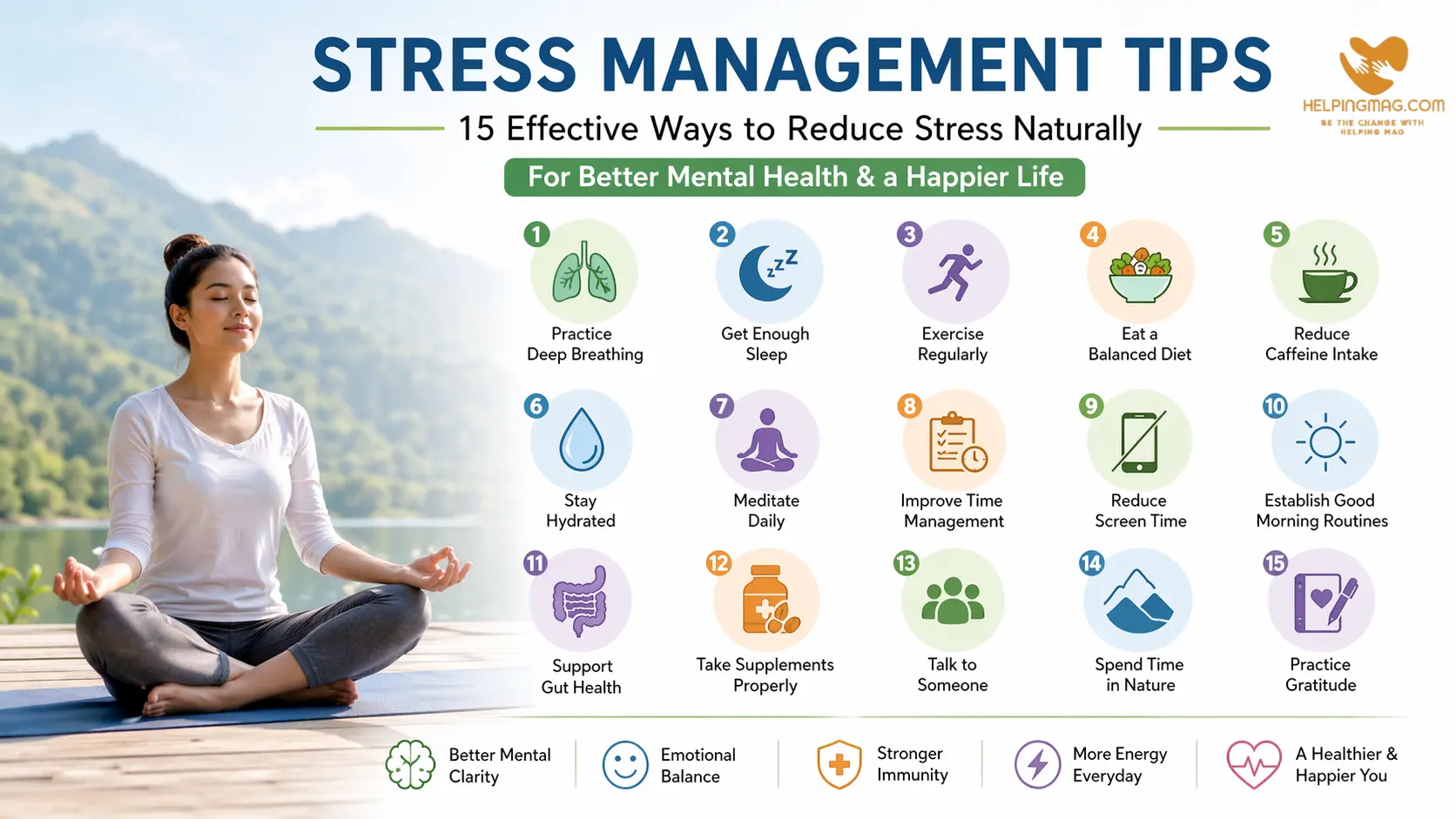
15 Effective Stress Management Tips
These are some of the practical and effective stress reduction methods below.
1. Practice Deep Breathing
Deep breathing triggers the parasympathetic nervous system and it has the effect of calming the body.
Try techniques like:
- Box breathing
- 4-4-4 breathing
- Diaphragmatic breathing
This may help to alleviate stress instantly.
2. Get Enough Sleep
Sleep deprivation enhances stress hormones and decreases emotional stability.
Adults must strive to achieve:
The average of 7-9 hours of sleep a night.
Sleep is good to boost mood, focus and immunity.
3. Exercise Regularly
Exercise causes the release of the natural body feel-good chemicals, endorphins.
Recommended activities:
- Walking
- Running
- Cycling
- Yoga
- Stretching
Exercise minimizes inflammation and enhances mobility among individuals who employ alleviating home remedies for knee pain.
4. Eat a Balanced Diet
Energy levels and mood are influenced by nutrition.
Includes foods that are high in:
- Protein
- Healthy fats
- Magnesium
- Vitamin D
- B vitamins
The lack of nutrients can aggravate fatigue and vitamin d deficiency symptoms in men.
5. Reduce Caffeine Intake
An excessive intake of caffeine can lead to a higher:
- Anxiety
- Nervousness
- Rapid heartbeat
Caffeine may be beneficial in stabilizing mood by limiting it.
6. Stay Hydrated
Even mild dehydration may have an impact on:
- Mood
- Focus
- Energy
Consume water sufficiently during the day.
7. Meditate Daily
Meditation enhances emotional regulation and lowering stress hormones.
A difference can be made even by 10 minutes daily .
8. Improve Time Management
Mismanagement is a cause of unwarranted stress.
Use:
- To-do lists
- Time blocking
- Priority systems
The less crammed organization is the one that solves mind overload.
9. Reduce Screen Time
Overuse of social media and screen time can heighten anxiety and stress.
Restrict time spent on the screen before going to bed.
10. Establish Good Morning Routines
Exercising in the morning has been found to lessen the stress and enhance concentration.
This goes hand in hand with morning habits for a healthy life.
Examples:
- Wake up early
- Drink water
- Get sunlight
- Stretch
11. Support Gut Health
The brain and the gut are related.
Eat:
- Yogurt
- Kefir
- Fiber-rich foods
- Fermented foods
The state of good gut health can positively affect mood.
12. Take Supplements Properly
Supplements can be energy and stress management support.
Knowing the best time to take multivitamins to increase the absorption and effect.
13. Talk to Someone
Opening up brings about less emotional pressure.
Talk to:
- Family
- Friends
- Therapist
Resilience is enhanced by social support.
14. Spend Time in Nature
Exposure to nature reduces cortisol levels and enhances mood.
Activities include:
- Walking in a park
- Gardening
- Hiking
15. Practice Gratitude
An attitude of gratitude can be used to redirect the painful experiences toward pleasant experiences.
Write down 3 things you are grateful for on a daily basis.
Weak Immunity and stress
Stress lowers the immune system.
Persons in chronic stress tend to have:
- Frequent colds
- Fatigue
- Slow healing
- Digestive issues
All these are typical signs of weak immunity.
Less stress keeps the immune systems healthy.
Stress and Sudden Weight Loss
Stress may be a factor influencing appetite and digestion.
Chronic stress might be part of sudden weight loss causes in some individuals.
Stress and Vitamin Deficiency
Nutrient absorption and lifestyle patterns can be affected by chronic stress.
Both an inappropriate diet and the lack of sunlight could aggravate vitamin d deficiency symptoms in men.
Symptoms may include:
- Fatigue
- Low mood
- Muscle weakness
When professional help is needed
Seek medical or mental health care in case of stress due to:
- Panic attacks
- Severe anxiety
- Depression
- Chronic insomnia
- Ongoing fatigue
Professional assistance can be of assistance.
Frequently Asked Questions
How to reduce stress the quickest way?
It might be quickly helped through deep breathing, walking and meditation.
Is it possible that stress undermines the immune system?
Yes. Immunoisuppression may occur due to chronic stress.
Is it possible to lose weight due to stress?
Yes. It can have an impact on appetite and metabolism.
Are stress and vitamin deficiency related?
Indirectly, yes. Stress can influence food intake and absorption of nutrients.
Conclusion
Stress management is crucial to physical and mental health in the long-run. Following stress management tips in an everyday environment can enhance mood, boost concentration, and boost immunity.
Naturally, reducing stress holds the benefit of avoiding fatigue, anxiety, and health complications and contributing to overall better living.Regularity in good health, rest, diet and emotional encouragement may significantly help in the long run.