Introduction
Vitamin D deficiency is now one of the most prevalent but neglected health-related issues in men. Most men feel endless fatigue, unexplainable pain in the body, frequent disease, mood swings, or lack of energy without understanding that their state may be one of the primary causes of low levels of vitamin D.
Contemporary living does not allow access to sunlight because of work, screen time, and sitting habits indoors. With time, this silent deprivation has an impact on bones, muscles, immunity, hormones and even if the mind is healthy. In this detailed guide, we explain the most important vitamin D deficiency symptoms in men, their causes, long-term health risks, and the most effective treatment options.
What Is Vitamin D and Why should Men Necessarily Have It?
Vitamin D is a fat soluble vitamin or hormone like vitamin in the body. It assists in the rate of calcium and phosphorus and aids in some essential body functions.
Key benefits of vitamin D:
- Strengthens bones and teeth
- Supports muscle strength
- Boosts immune system
- Helps to control the level of testosterone
- Improves mood and brain health
On reducing vitamin D, men can develop physical and mental health issues.
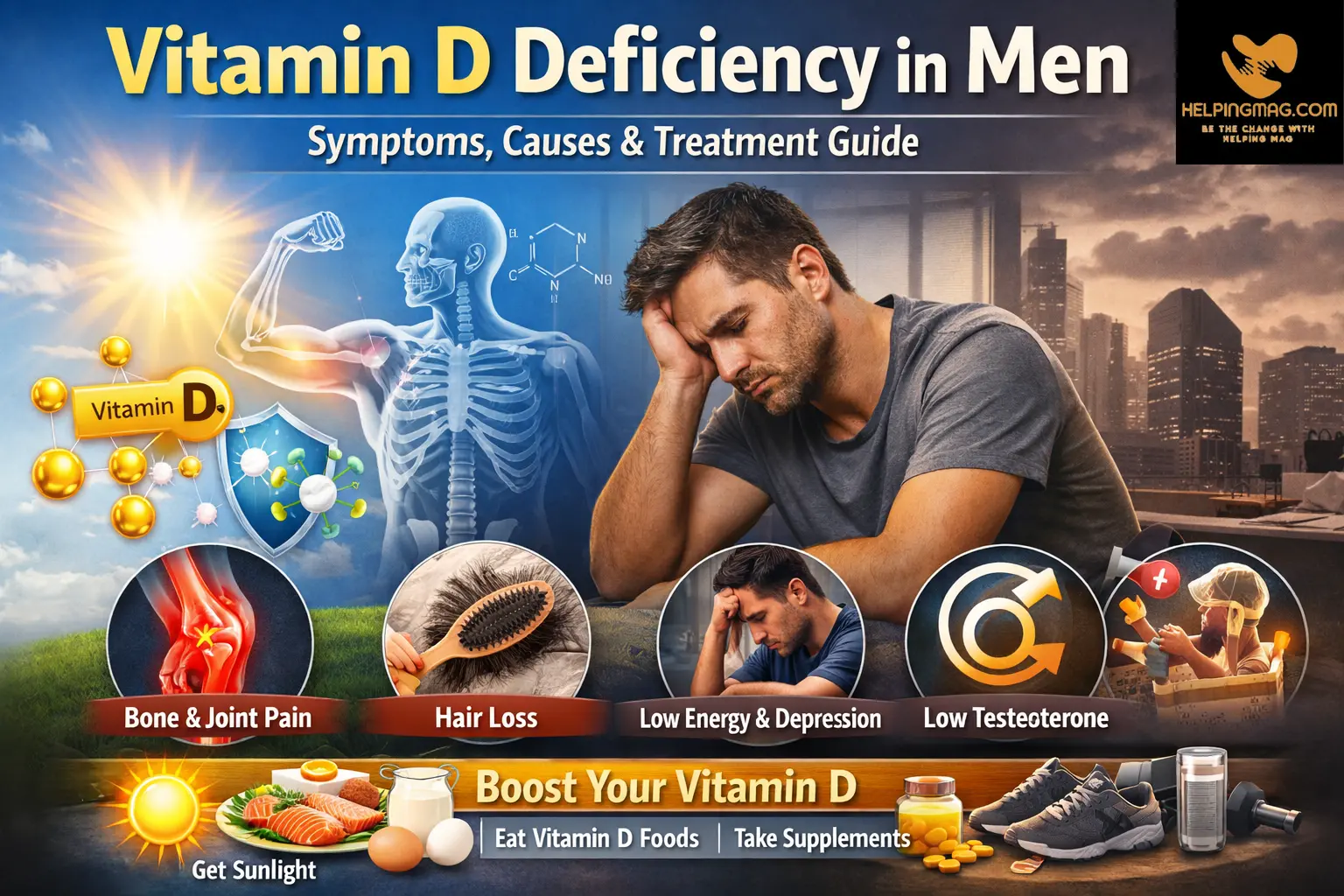
Vitamin D Deficiency Symptoms in Men
Below are the most common and medically recognized vitamin D deficiency symptoms in men.
1. Excessive Chronic Fatigue and Low Energy
One of the first symptoms of vitamin D deficiency has to do with persistent weariness. Men would still feel tired despite adequate sleep. Low levels of vitamin D decreases the energy generation at the cellular level, hence resulting in poor concentration and low productivity.
2. Pain and Joint Discomfort In Bones
Vitamin D assists the body in the absorption of calcium. Bones are weak and painful when the levels are low. Most men complain of lower back pains, knee pains and stiffness of the joints.
Under these conditions, a portion of them also seek the natural HOME REMEDIES FOR KNEE PAIN to cope with discomfort inexpensively in conjunction with any medical therapy.
3. Muscle Weakness and Cramps
Vitamin D is very important in muscle contraction and strength. Deficiency can result in muscle cramp, weakness, loss of stamina and felled joint day-to-day activities.
4. Recurring Vitality and Low Immunity
An effective immune system depends on vitamin D. Men who are low in vitamin D normally experience frequent infections and colds, and slow healing. These are clear SIGNS OF WEAK IMMUNITY that should never be ignored.
5. Hair Loss and Thinning
Hair fall or thin hair that cannot be explained may also be related to the lack of vitamin D. Vitamin D aids in normal growth of the hair follicles and lack of adequate amounts can interfere with the cycle.
6. Mood Swings, Anxiety and Depression
Vitamin D affects the serotonin that is a chemical in the brain that determines the moods. The low level of vitamin D is associated with mood swings, anxiety, irritability, and depression symptoms.
7. Low Testosterone Levels
Vitamin D is significant in the production of testosterone. The insufficiency can cause low libido, loss of muscle mass, loss of motivation, and lack of energy among men.
8. Poor Sleep Quality
Vitamin D receptors can be found in those sections of the brain that control sleep. Deficiency can result into either low quality of sleep, inability to fall asleep or excessive sleepiness on a daily basis.
9. Slow Metabolism and Gain of weight
Low levels of vitamin D lead to fats and cannot lose weight. Vitamin D aids in the regulation of insulin bioactivity and metabolism.
Vitamin D Deficiency Reasons in Men
It is imperative to learn the causes of vitamin D deficiency in order to prevent it.
Common causes include:
- Limited sunlight exposure
- Indoor lifestyle
- Poor dietary intake
- Aging
- Digestive or absorption problems
- Obesity
Health Dangers of Vitamin D Deficiency in the Long-Term
Unremedied long term deficiency in Vitamin D could result in the risk of:
- Osteoporosis and bone fractures
- Chronic fatigue
- Heart disease
- Diabetes
- Autoimmune disorders
- Hormonal imbalance
Vitamin D Deficiency Treatment
1. Sunlight Exposure
Spend 15–30 minutes in sunlight daily, preferably in the morning.
2. Vitamin D-Rich Foods
Include:
- Fatty fish (salmon, tuna)
- Egg yolks
- Fortified milk and cereals
3. Supplements
Supplements must be intake in accordance with medical examinations and blood tests. Knowing the BEST TIME TO TAKE MULTIVITAMINS improves absorption and results.
According to the National Institutes of Health (NIH), vitamin D plays a vital role in absorption of calcium and maintenance of the bones.
4. Lifestyle Changes
- Regular exercise
- Balanced diet
- Weight management
- Reduced stress
How to Test Vitamin D Levels
The 25-hydroxy vitamin D test is a blood test that is conducted to determine the level of vitamin D in the body.
Reference ranges:
- Deficient: below 20 ng/mL
- Insufficient: 20–30 ng/mL
- Sufficient: 30–50 ng/mL
FAQs
Is vitamin D deficiency common in men?
Yes, it is very common due to limited sun exposure and indoor lifestyles.
Can vitamin D deficiency be reversed?
Yes, with sunlight, diet, and supplements if needed.
Is daily vitamin D supplementation safe?
Only under medical supervision.
Conclusion
Vitamin D deficiency symptoms in men should never be ignored. Fatigue, bone aches, poor immunity, and hormonal imbalance are some of the side effects of low vitamin D, which can harm body health unknowingly. Provided the timely testing, sufficient sunshine, and the right treatment, the good levels of vitamin D will be restored and the quality of life will increase dramatically.