Introduction
The usage of multivitamins is one of the most used supplements worldwide. Individuals use them to promote immunity, enhance energy, increase nutrient absorption, and their health in general. Nevertheless, timing, which is a simple yet important factor, is disregarded by many people.
The information about the best time to take multivitamins can greatly aid in the way your organism will take and use nutrients. Using them when they are not needed can lower the efficiency or have some light digestive distress or disrupt sleep.
Timing is crucial even more when a person has to face fatigue, deficiency, or immune problems. Indicatively, the men who are continually feeling tired and in low spirits are possibly having a problem of vitamin d deficiency symptoms in men that are usually related to inefficient uptake of nutrients.
This comprehensive handbook describes the impact of timeliness on the absorption, immunity, hormones and well-being over time.
According to the National Institutes of Health (NIH), fat-soluble vitamins such as A, D, E, and K are best absorbed when taken with meals that contain dietary fat.
Why Timing Makes a Difference
Vitamins do not necessarily act similarly within the body. There are nutrients stored and others which are to be corrected on a daily basis. Others need dietary fat to be absorbed whereas some are lipophobic and can be easily dissolved in water.
There are two major categories of vitamins:
Fat-Soluble Vitamins
These are vitamins A, D, E and K. They need to be fed the dietary fat and are stored in the body tissues.
Water-Soluble Vitamins
These are vitamin B-complex and vitamin C. They get absorbed fast and are not stored in large quantities.
Even quality supplements cannot provide full benefits when used in the wrong form even of high quality.
Morning or Night: Which One Works Better?
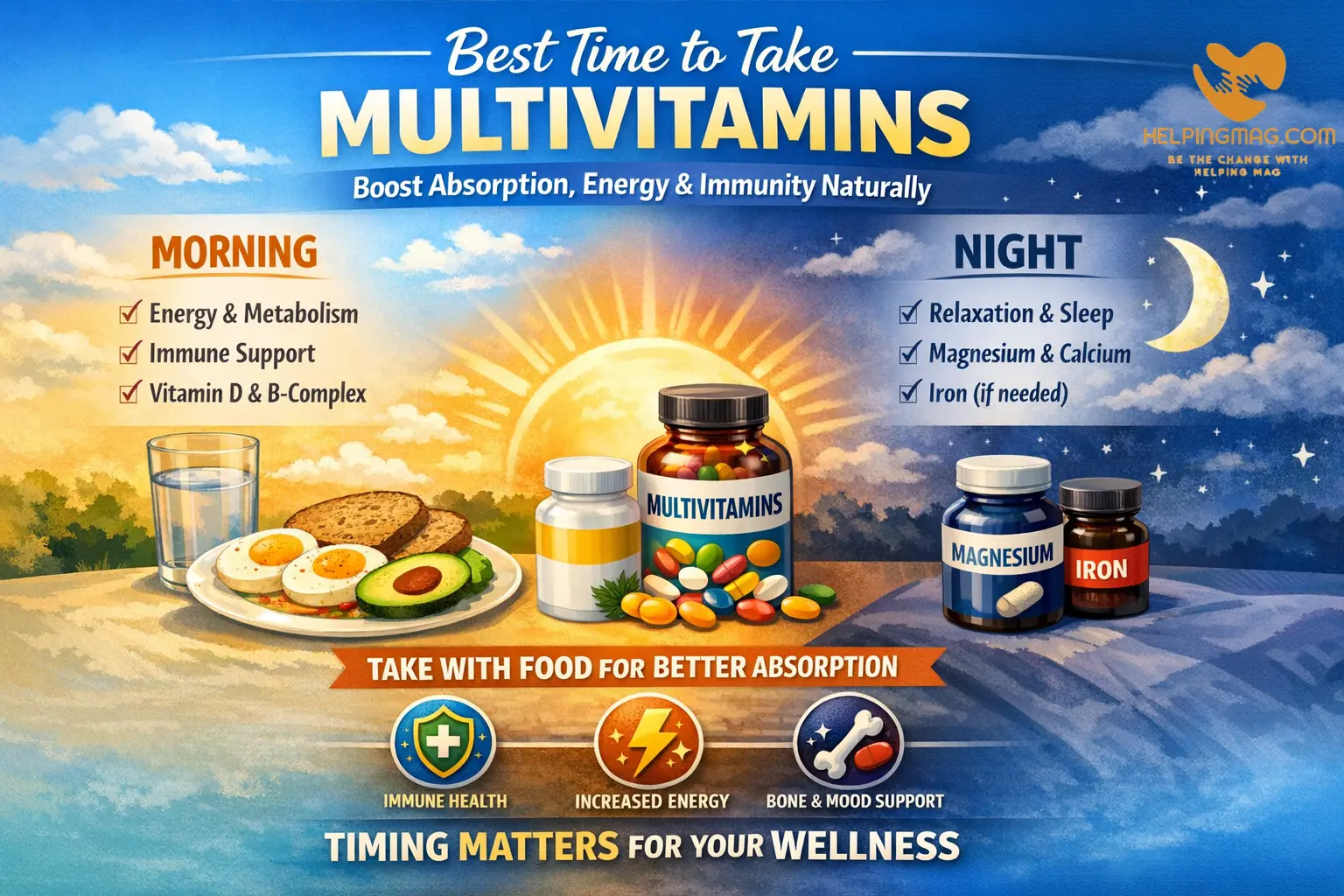
To the majority of the population, it is best to take the multivitamin in the morning and on an empty stomach.
Why Morning Is Often Better
- B vitamins are involved in energy generation
- It helps establish a daily routine
- Reduces risk of sleep disruption
- Enhances daytime metabolism
It is also beneficial particularly in the morning when one feels tired or fatigued during the day. Fatigue may even be similar to signs of weak immunity, such as frequent illness and slow recovery.
Earlier use of the supplements within a day also helps in immune activation when the body is more active.
Is Night Supplementation Structured Fittingly?
Whereas a complete multivitamin is preferably consumed in the morning, it has some exceptions.
For example:
- Magnesium may promote relaxation
- Calcium may support bone health
- Some individuals tolerate iron better later in the day
However, multivitamins with B-complex vitamins can make one alert and disturb sleep when taken too late.
Should Multivitamins Be Taken With Food?
Yes — this is extremely important.
Taking supplements with a meal:
- Improves absorption of fat-soluble vitamins
- Reduces nausea
- Enhances nutrient utilization
- Protects stomach lining
To illustrate, the absorption of vitamin D is increased several times when combined with healthy fats.
Absorption of vitamin D may be poor hence leading to chronic deficiency. In men, this may lead to symptoms such as fatigue, muscle weakness, and reduced hormonal balance — commonly associated with vitamin d deficiency symptoms in men.
Timing of Vitamin D and Multivitamin
Special care should be given to vitamin D.
It supports:
- Bone strength
- Immune function
- Testosterone production
- Mood regulation
With a decrease in the concentration of vitamin D, people are likely to feel:
- Low energy
- Muscle discomfort
- Reduced immunity
- Mood changes
They are usually advanced messages on insufficiency.
Timely intake and appropriate food combinations enhance the uptake of vitamin D and lowering the risk in the long-term.
The Relationship between Multivitamins and Immunity
Micronutrients play major roles in the functioning of the immune system.
Under the condition of poor absorption of nutrients, the body might fail to combat infections. Red flags can be taken into account at an early stage:
- Recurrent colds
- Slow wound healing
- Persistent fatigue
- Digestive disturbances
Such are typical Signs of Weak Immunity and cannot be overlooked.
An appropriate time of supplementation helps the body to resist infections and minimizes inflammation.
The Nutrients That are Better to Be used at a particular time
Vitamin C
Better taken in the morning or the early afternoon. It prevents oxidant defense and immune cell functioning.
B-Complex Vitamins
It is recommended to be taken in the morning because they help in energy metabolism.
Iron
It should be ingested on an empty stomach where it would be most effective yet it can lead to irritation in some people.
Magnesium
Frequently administered as a night to relax and stimulate sleep.
Multivitamins, Inflammation, and Joint Health
Nutrient imbalance that is long-term may cause inflammation. Inflammation can in certain circumstances aggravate joint pain.
Although most are claiming possible home remedies for knee pain, the nutritional deficiency, especially vitamin D can also contribute to bone and joint pains.
Hunting is beneficial in making sure the nutrients are absorbed, with the right time, so that, in the long run, musculoskeletal health has been improved.
Common Mistakes People Make
- Consumption of supplements without food intake
- Mixing iron and calcium together
- Inconsistent usage
- Overdosing without medical advice
- Ignoring persistent fatigue or immune issues
The stability of things is more important than their perfection.
A Simple Daily Routine Example
Morning (with breakfast):
- Multivitamin
- Vitamin D
- Vitamin C
Evening (if needed):
- Magnesium
This daily ritual favors metabolism, immunity and hormones.
When to Seek Medical Advice
Consult a healthcare professional if you experience:
- Ongoing fatigue
- Frequent infections
- Hair loss
- Bone or joint pain
- Symptoms linked to low vitamin D
Blood tests aid in observing deficiencies and also see supplementation safely.
Frequently Asked Questions
Is it really the best time of the morning?
Yes, when most people include B vitamins and vitamin D in the supplements.
Is bad timing one of the weaknesses of immunity?
Indirectly, yes. As a result of poor absorption, there will be a decrease in immune efficiency.
Are multivitamins substitutes for a healthy meal?
No. They fill any unbalanced nutritional deficiency but not balanced meals.
Conclusion
Knowing the best time to take multivitamins is helpful in maximizing nutrient absorption, energy level, and immunity, by helping to protect the body. Morning food intake offers the best outcomes to the majority.
The right time is favorable to hormonal balance, immune response, and might aid in the resolution of the complications related to the vitamin d deficiency symptoms in men and persistent Signs of Weak Immunity.
This method of creating long-term wellness is done naturally through proper nutrition, exposure to sunlight and healthy practices.